
A full yard can still produce weak returns. Container rental business profitability depends on how often each unit earns revenue, the operating and delivery work behind that income, and the container’s resale value. Estimate it by comparing rental and storage income with operating expenses, depreciation and expected resale proceeds. Leasing terms also affect when income arrives and how much flexibility you retain. A useful forecast tracks cash flow and asset value together, rather than treating rental receipts as the whole result.
It’s reasonable to focus first on rental income. The fuller picture also includes idle time, maintenance, damage and the value recovered when a container leaves the fleet. These factors can change the result even when the advertised rate stays the same. This guide explains how to organize estimates, identify assumptions that need close attention, and make informed decisions about fleet investment and leasing arrangements.
You’ll work through a practical sequence: compare leasing approaches, calculate income against operating demands, account for depreciation, and assess resale value. You’ll also see how storage income fits into the model, how rental rates can differ by container type and location, and which operating measures show whether your fleet is earning or sitting idle. Use these steps to build a forecast for your operation, then update it as bookings, unit condition and service requirements change.
Key Takeaways
- Compare leasing arrangements by payment timing, income predictability and how much control you retain over container use.
- Estimate depreciation alongside expected resale value, using container condition, age and local demand to inform replacement decisions.
- Measure profit after accounting for utilization, delivery demands, maintenance and idle time, not rental income alone.
- Assess storage income and rental rates by container type and location, then compare them with the operating demands of each offer.
- Portable Storage Pro’s Growth Engagement Model can support operators working on procurement, sales and marketing, or technology decisions tied to profitable growth.
Conservative and variable leasing strategies
Local demand, competition and seasonality affect achievable rates, bookings and idle time. Review each factor by container type and service area before settling lease terms.
-
Compare rental rates by size and location
Compare offers for standard, larger and refrigerated containers separately. Match condition, lease duration and included services before using an offer as a benchmark. Local competition and delivery expectations also shape what customers will accept. Keep a record by container type and service area. Don’t apply a rate from another market without accounting for differences in demand and fulfilment.
-
Assess demand, competition, and seasonality
Review inquiry and booking patterns across the year for each container category. Local construction, commercial storage needs and competing supply can affect demand. Compare busy periods with quieter ones, then adjust your forecast to reflect the pattern. Don’t treat a temporary demand spike as a lasting rate opportunity. Track unconverted quotes alongside completed bookings to identify where demand is strong but your offer falls short.
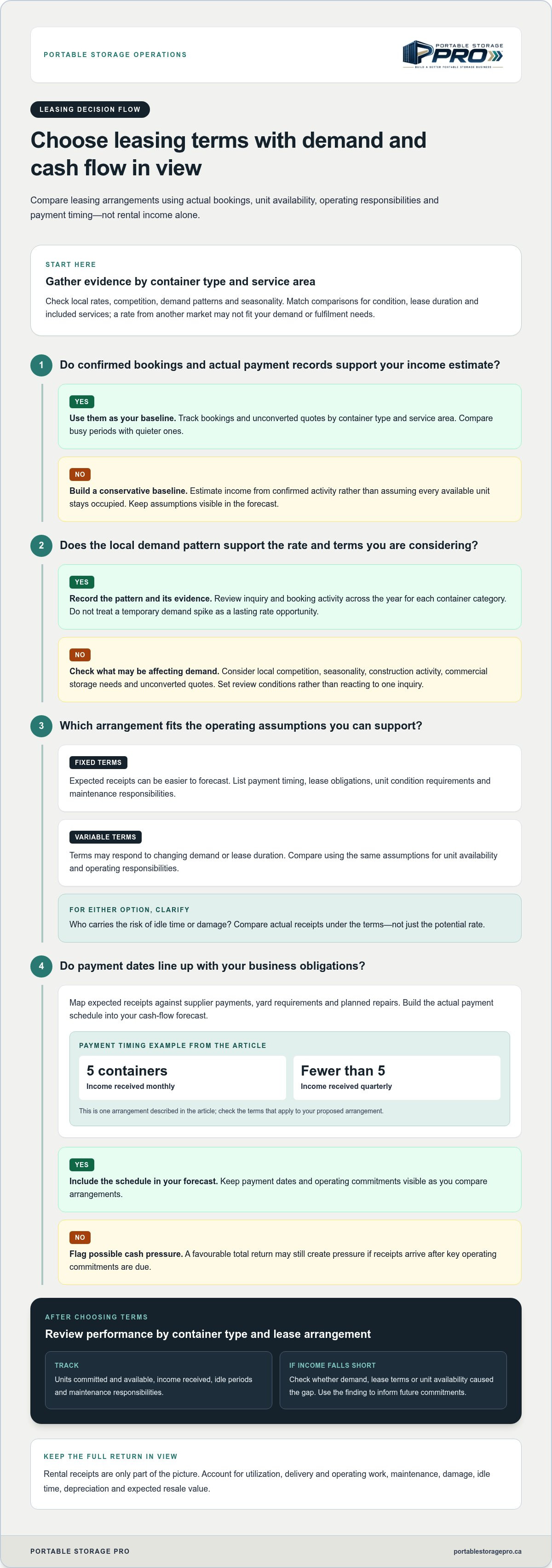
- Set a conservative baseline before testing variable terms. Use confirmed bookings and actual payment records to estimate income, rather than assuming every available unit stays occupied. List lease obligations, payment timing, unit condition requirements and maintenance responsibilities. Keep those assumptions visible in your forecast. A baseline gives you a practical comparison when demand changes or a different lease structure is proposed.
- Separate fixed terms from variable ones in your comparison. A fixed arrangement can make expected receipts easier to forecast, while variable terms may respond to changing demand or lease duration. Compare both using the same assumptions for unit availability and operating responsibilities. Note who carries the risk of idle time or damage. Don’t choose solely for the potential rate; compare the terms that determine actual receipts.
- Map payment timing against your business obligations. Under one described arrangement, owners of five containers receive income monthly, while owners of fewer than five receive it quarterly. Build that schedule into your cash-flow forecast. Compare income dates with supplier payments, yard requirements and planned repairs. A favourable total return may still create cash pressure if receipts arrive after key operating commitments are due.
- Review lease performance at regular operating intervals. Track units committed, units available, income received, idle periods and maintenance responsibilities. Compare results by container type and lease arrangement, not just across the whole fleet. If a unit earns less than expected, determine whether demand, terms or availability caused the gap. Use the finding to adjust future commitments, rather than assuming every container should follow the same leasing strategy.
- Set a rule for seasonal adjustments. Define the conditions that would prompt a rate or term review, such as a change in booking activity or competing supply. Record the reason for each adjustment and its effect on subsequent bookings. This gives owners and staff a consistent decision process and reduces reactive changes based on a single inquiry or an unusually busy period.
Container depreciation and resale value
Estimate each container’s useful service life, recorded value and likely exit condition before purchasing. Treat acquisition assumptions, maintenance history and resale prospects as separate parts of the asset plan.
-
Estimate new and used container purchase costs
Compare new and used units by size, condition and intended rental role. Purchase outlay depends on the unit’s age, structural condition, delivery requirements and preparation work. Inspect the floor, doors, seals and visible damage before assigning it to a fleet category. Don’t compare a ready-to-rent unit with one that needs repairs. Record inspection findings so each option has a clear operational basis.
-
Track depreciation and resale value
Record the acquisition value and review the container’s condition as it ages. Estimate its remaining service life using inspection history, repair frequency and suitability for current customers. Resale value depends on condition, size, demand and how much work a buyer must complete before use. Don’t treat depreciation as a fixed physical decline. A container’s actual condition and market appeal may change at different rates.
- Create an individual asset record for every unit. Include its fleet identifier, acquisition details, inspection notes, repairs, damage and refurbishment. Add photographs after material repairs or condition changes, so you can compare the container over time. For example, record whether a door closes properly after repair. Consistent records make it easier to explain a resale estimate and identify units with recurring maintenance needs.
- Separate recorded depreciation from cash flow. Depreciation represents the declining recorded value of an asset over its expected service life, while cash flow records money moving into or out of the business. A container may continue earning rental income while its recorded value falls. A later sale is a separate transaction. Keep these lines distinct in your forecast to avoid counting the same asset value twice.
- Estimate resale condition before setting a replacement trigger. Assess structural integrity, doors, flooring, weather resistance and the repairs a buyer would face. Compare those findings with recent offers for similar units in your market. Don’t treat an asking price as proof of achievable proceeds. A unit needing substantial work may attract a different buyer or require preparation before sale.
- Compare keeping a unit with replacing it. Include its expected rental contribution, maintenance demands, downtime and likely resale proceeds in the decision. For example, recurring repairs may reduce the value of keeping a container even when it remains serviceable. Review the decision by unit rather than applying one fleet-wide rule. This helps align replacement timing with condition, customer requirements and available inventory.
- Review assumptions whenever an inspection, repair or market change alters the asset’s outlook. Update condition records and revise the expected service life or resale estimate accordingly. Keep the earlier estimate for comparison, with a note explaining the change. That record shows whether the original assumption was reasonable and helps improve future purchasing decisions.
Profitability and return margins
Compare returns after accounting for operating demands, not from rental income alone.
-
Compare returns across container businesses
Compare each model by revenue pattern, asset use and operating responsibility. Container rentals can produce recurring income, while container sales generate proceeds from a transaction without ongoing rental receipts. Storage units rely on rentable space, while portable storage adds container placement and retrieval requirements. The models differ, so don’t compare headline revenue without considering how each earns income.
A container’s rate, utilization and operating demands determine its contribution.
-
Account for operating expenses
List the expenses that reduce rental income before calculating net results. Include procurement, delivery, empty mileage, yard handling, maintenance, damage, insurance, staffing, marketing and technology. These are the operating expenses that affect container rental business profitability. Separate recurring expenses from costs tied to a specific rental or delivery, so you can see which bookings cover their service requirements.
For each unit, track rental income against the work required to prepare, move and return it. For example, a booking with substantial empty mileage can contribute less than a similar booking served along an existing route. Record repairs and time out of service as well. This shows whether low returns stem from the rate, delivery plan, unit condition or idle time.
-
Manage risks and improve profitability
Identify the main risks in your fleet forecast: weak bookings, idle containers, damage, unplanned repairs, inefficient routes and demand concentrated in one season. Each can reduce income or increase operating demands. Assess performance by measuring utilization, quote conversion, delivery activity and repair frequency by container type. Review the results regularly, rather than relying on fleet-wide averages that can hide underperforming units.
Steady bookings and efficient logistics can support returns of 10-15%, but that range is not a substitute for your own operating records. Protect margin by matching inventory to demand, reducing avoidable empty mileage and addressing repeat damage through staff procedures. Review quotes that do not convert alongside completed rentals. A lower quote may win work but still contribute poorly when delivery and service demands are high.
Compare each change against a clear measure. If a route adjustment reduces empty travel, assess its effect on delivery activity and unit availability. If maintenance work reduces downtime, track the container’s booked days afterward. These checks help distinguish an operating improvement from a short-term revenue change.
Shipping container storage business
Build the storage model around yard capacity, customer demand and container utilization. A standard 20-foot storage container has average occupancy of about 75%, making vacant time a key planning measure.
-
Estimate container rental startup costs
List the resources required before accepting the first rental, then separate setup needs from ongoing operations. Include container inventory, yard access, equipment, staffing, insurance, marketing and technology. Required capital depends on fleet size, equipment needs and the operating model. Don’t treat container purchases as the only startup expense; a fleet also needs a workable yard and processes for preparing units.
-
Account for delivery, pickup, and yard costs
Map each delivery and pickup from the yard to the customer site and back. Account for driver time, fuel, handling, empty mileage, yard space and container preparation, then compare routes with actual bookings. A distant booking may bring rental income but also require more transport and handling. Track these activities separately so you can see which locations and service patterns contribute to the operation.
- Identify local approvals and insurance considerations before selecting a yard. Check applicable land-use, zoning and permit conditions with the relevant municipality, since requirements depend on the site and its intended use. Assess insurance needs against your fleet, yard, vehicles and customer contracts. Keep approval and coverage records with your operating documents, rather than assuming one location’s conditions apply elsewhere.
- Set a startup budget by listing each resource needed to open and maintain the operation. Container inventory and equipment needs shape the initial investment, while yard arrangements, staffing, insurance and customer acquisition affect ongoing cash requirements. Model these separately. A smaller fleet may need less equipment, but insufficient capacity can limit bookings or service coverage.
- Measure utilization and contribution by container type. Treat the profit estimate as a reference, then calculate your own results after delivery, pickup, yard handling, repairs and idle periods. Keep utilization and operating expenses visible in separate records.
- Test your storage plan against local demand before expanding inventory. The global container storage and rental market was valued at about USD 13.2 billion in 2025 and is projected to reach around USD 21.7 billion by 2034, with an expected average annual growth rate of 5.8%. Use this market context alongside local booking patterns, not as a substitute for them.
- Review yard capacity before adding units. Track available positions, access routes, turnaround time and containers awaiting repair. If new inventory limits safe movement or delays dispatch, the yard may constrain service before demand does. Set an expansion trigger using booked demand, available space and the time needed to prepare containers.
What are typical shipping container rental rates by size and location?
Rental rates vary by container size, type, location and included service. Compare like-for-like local offers, then test each rate against delivery, utilization and operating requirements.
- Compare rates by container type. Separate standard storage, shipping-grade and refrigerated containers in your rate review. A 20-foot standard unit serves different requirements from a 40-foot unit or refrigerated equipment. Compare each type with similar condition, rental term and included services. Don’t treat one container’s rate as a reliable benchmark for the rest of your fleet.
- Build a local comparison set. Review offers in the specific market your fleet serves, such as Denver or Charleston, rather than applying one national figure. Record container type, condition, rental period, delivery terms and any included service. Compare matching offers first. A lower headline rate may exclude services that your business includes, so account for those differences before making a pricing decision.
- Calculate the delivered rate. Add the service requirements associated with each booking before assessing its contribution. A container placed near your yard may require less transport effort than one placed farther away. Include delivery, pickup, handling, preparation and likely empty mileage in your internal assessment. This helps you distinguish a competitive customer rate from a booking that leaves little room after fulfilment.
- Adjust for local demand and competition. Track inquiry volume, quote conversion and bookings by location and container type. Compare your offer with local alternatives, but don’t match a competitor’s rate without understanding its service terms. If demand is strong for refrigerated units but weaker for standard storage, review each category separately. Use completed bookings and lost quotes to guide changes.
- Account for seasonal booking patterns. Review bookings across the operating year and note when customers request specific sizes or equipment. Compare peak periods with slower intervals before setting longer-term assumptions. For example, a seasonal rise in demand for 20-foot units doesn’t establish year-round demand for 40-foot containers. Keep separate records for each type, location and period.
- Test rates against utilization and service demands. For each container category, compare the offered rate with occupied time, idle periods, maintenance and delivery workload. A refrigerated unit may command a different rate from a standard container, while also requiring different operating considerations. Review contribution by unit and location, then adjust offers where actual booking patterns and fulfilment requirements support the change.
Costs vary by location and placement distance, and depend on delivery, pickup, handling, preparation and likely empty mileage.
Portable Storage Pro: Growth Engagement Model
Portable Storage Pro’s Consulting Partner model can help turn fleet and financial analysis into a focused improvement plan. It fits operators who have identified constraints, such as low quote conversion, procurement challenges or gaps in their technology stack, and want practical support addressing them.
Depending on your priorities, Sales, Marketing & Lead Generation can help strengthen inquiry handling and conversion. Procurement & Sourcing supports equipment and supplier decisions, while Technology & Innovation can help assess tools against operational needs. This work stays connected to the practical demands of container rental operations, rather than treating growth as a standalone target.
If you’re weighing next steps for your rental business, discuss your growth priorities with Portable Storage Pro.
Turn your estimates into operating decisions
Use your financial model as a working management tool, not a one-time forecast. Set clear review points for fleet additions, replacements, rental terms and customer demand. When a key assumption changes, update the model and decide whether to buy, retain, reposition or sell a container. This discipline connects asset decisions with the direction of your business.
Improving container rental business profitability also means turning financial insight into action across sales and procurement. Portable Storage Pro’s Growth Engagement Model can help you set growth priorities. Sales, Marketing & Lead Generation can address lead conversion, while Procurement & Sourcing can support equipment and supplier decisions. Choose the area that matches your current operating constraint, then track whether the changes improve the measures that matter to your business.
Contact Portable Storage Pro to discuss your options and identify a practical next step for your rental operation. A clear plan can help you move forward with confidence.
Frequently Asked Questions
What is a Container Rental Business?
A container rental business earns income by renting shipping containers to commercial or other customers for temporary use. The operator manages fleet acquisition, condition, availability, customer agreements and the logistics needed to place and recover units. Unlike a container sale, rental keeps the asset in the fleet and can generate repeat bookings. The model works when rental receipts support ongoing operating demands and asset upkeep.
How profitable is a shipping container rental business in the United States?
In the United States, container rental business profitability depends on booked revenue per unit and the full operating burden, not the rental rate alone. Calculate operating profit by subtracting delivery, pickup, yard, repair, insurance, staffing, marketing and depreciation from rental revenue. Compare results across unit types and service areas. Strong demand can still produce weak results if empty repositioning, downtime or damage consumes too much of each booking’s contribution.
What are typical utilization rates, revenue, and profit margins for container rental companies?
Typical utilization varies by container class: 40-foot shipping-grade containers average about 80%, while 20-foot refrigerated units average about 70%. Estimate revenue by multiplying each unit’s rental rate by its occupied billing periods, then total across active inventory. Calculate profit margin by dividing profit after operating expenses by revenue. Track each figure by container type and location, since fleet averages can hide idle categories.

Article by
Paul Taylor
Paul Taylor is the founder of Portable Storage Pro, bringing more than 35 years of experience across the container, portable storage and transportation industries. His background spans executive operations, business development, global procurement, sales, marketing and operational improvement in Canada, the UK and international markets.
Paul helps independent portable storage and container rental operators increase revenue, strengthen margins and build more efficient businesses. His work connects strategy with practical implementation, including pricing, delivery operations, supplier sourcing, staff training, technology and customer experience.
His experience includes leading multi-location storage operations and serving on the National Portable Storage Association’s board along with chairing its Canadian committee. Through Portable Storage Pro, Paul shares practical insights to help owners make informed decisions, solve operational challenges and grow profitably.
Disclaimer
Content published by Portable Storage Pro Inc. (PSP) provides general business information and industry insights. It does not replace advice tailored to your business or specialist legal, tax, engineering or other regulated advice. Reading this content or contacting PSP does not, by itself, establish a consulting engagement.
Information reflects circumstances at publication and may change. Examples and potential benefits are illustrative; results depend on individual circumstances, implementation and market conditions and are not guaranteed.
Client services are governed by the signed service agreement, agreed work plan and written amendments. Website and blog content do not amend those terms. PSP’s work is subject to applicable law and the professional commitments set out in its agreement, including the CMC-Canada Code of Professional Conduct and NPSA Code of Conduct and Ethics. Copies are available on request.
Views expressed are PSP’s own. Association membership or references do not imply association endorsement or CMC certification. Nothing in this disclaimer limits PSP’s contractual responsibilities, professional duties or rights that cannot lawfully be excluded.


