
A conference agenda is useful only when its speakers and sessions align with decisions your business needs to make. Speakers, topics and registration deadlines vary by event and edition, so there is no single schedule for storage operator conference representation. Start by comparing each programme with your operating priorities.
Conferences can help you follow industry developments and build professional connections. The challenge is deciding which sessions warrant your time and when to register, especially while balancing attendance with day-to-day operations.
This article explains how to assess conference speakers and topics for relevance to portable storage and self-storage operators, and how to track registration deadlines as details are released. It also covers what representation can accomplish when you cannot attend, helping you weigh an event’s programme, timing and purpose before committing.
Key Takeaways
- Compare conference agendas with your business priorities, including portable storage operations, sales and technology.
- Assess speakers and session topics for practical value before deciding which events merit your time.
- Track registration deadlines alongside travel and staffing plans so conference attendance fits your operating schedule.
- Clarify what you want a representative to do, from attending sessions to sharing relevant industry insights with your team.
- Weigh the value of outside representation against the need for direct participation and the time your team can commit.
Which conferences are relevant to self-storage operators in the United States?
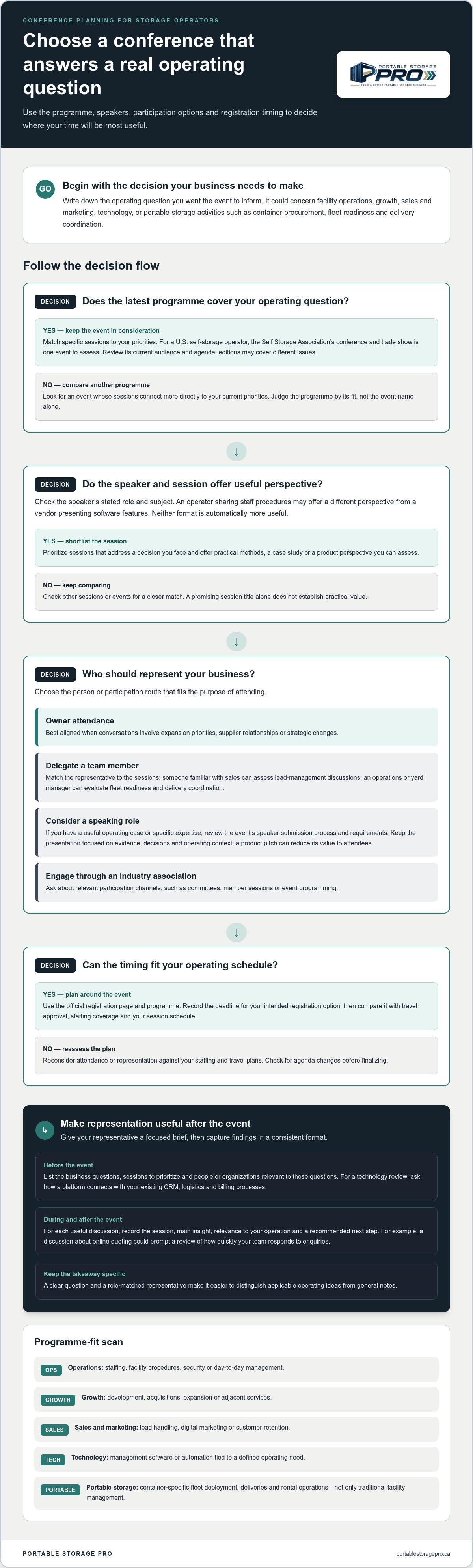
For a U.S. self-storage operator, industry-specific events are the clearest starting point. The Self Storage Association’s conference and trade show is one event to assess. Its relevance depends on the current programme, intended audience and opportunities for operator-focused learning. Review the event’s latest agenda rather than assuming every edition covers the same issues.
Compare sessions with the decisions facing your facility or portable-storage operation. A programme focused on development may suit an operator assessing a new site. Sessions on revenue management or customer acquisition may better serve a facility reviewing occupancy, lead conversion or sales follow-up. If your self-storage business is adding portable units, look for topics on delivery coordination, container procurement, fleet readiness or integrating a new service into existing operations.
Use these programme signals to assess fit:
- Operations: Sessions on staffing, facility procedures, security or day-to-day management may help you examine service consistency.
- Growth: Development, acquisitions and expansion topics may inform decisions about adding locations or adjacent services.
- Sales and marketing: Lead handling, digital marketing and customer retention topics can connect directly to your sales process.
- Technology: Presentations on management software or automation may help you assess whether a tool addresses a defined operating need.
- Portable storage: Look for container-specific content on fleet deployment, deliveries and rental operations, not only traditional facility management.
A speaker’s relevance matters as much as a session title. Review the speaker’s stated role and subject. An operator discussing staff procedures, for example, may offer a different perspective from a vendor presenting software features. Neither format is automatically more useful. Consider whether the topic informs a decision you face, and note whether the session offers practical methods, a case study or a product perspective.
Registration deadlines vary by event, so use its official registration page and programme as planning references. Record the deadline for the option you intend to use, then compare it with travel approval, staffing coverage and your session schedule. Check for agenda changes before finalizing attendance. An event with strong development sessions may be a poor fit if your immediate priorities are delivery efficiency or portable-storage sales.
Build a concise comparison before choosing. For each event, record its audience, relevant sessions, speaker backgrounds, registration deadline and the operational question you want answered. Compare the Self Storage Association’s conference and trade show with other events whose programmes match your priorities. This is more useful than judging an event by its name alone.
How can a storage operator get represented at an industry conference?
A storage operator can be represented by attending personally, delegating a staff member, speaking or coordinating with an industry association. The right approach depends on what you need from the event. An owner assessing software may benefit from attending directly, while a busy operator could ask a manager to gather information on specific operating questions. A clear storage operator conference representation plan starts by defining what the business needs from participation.
Write down the decision you want the conference to inform, such as improving lead conversion, assessing portable-storage technology or understanding facility operations. Then choose a representative suited to that purpose. Someone familiar with your sales process can assess lead-management sessions; a yard or operations manager can evaluate discussions about fleet readiness and delivery coordination. The representative needs enough business context to identify what applies.
- Attend as the owner: Choose this when conversations involve expansion priorities, supplier relationships or strategic changes.
- Delegate a team member: Assign someone whose role connects directly to the sessions you want covered.
- Seek a speaking role: If you have a useful operating case or specific expertise, review the event’s speaker submission process and requirements.
- Engage through an association: Ask about its conference participation channels, such as committees, member sessions or event programming.
Speaking gives your business a defined role, but it calls for a relevant subject and a clear, evidence-based presentation. An operator might describe how its team connects website enquiries with sales follow-up. Keep the topic focused on lessons, decisions and operating context. A product pitch can diminish the value of a session for attendees.
Delegation works best with a clear brief. Before the event, give your representative the business questions to investigate, the sessions to prioritize and the people or organizations relevant to those questions. If the goal is to assess technology, ask them to note how a platform connects with your existing CRM, logistics and billing processes. “Bring back ideas” is too general to guide useful follow-up.
Use a consistent method to capture findings. A short conference note can record the session, its main insight, relevance to your operation and a recommended next step. A discussion about online quoting, for example, might prompt a review of how quickly your team responds to enquiries. Distinguish an operator’s example from a vendor’s product claims, then assess each against your own workflow.
After the event, hold a focused debrief and assign an owner to each practical follow-up. Storage operator conference representation is valuable when information informs a business decision, not simply when it produces session notes. Turn relevant insights into a defined priority, such as reviewing a sales process or assessing technology requirements. This gives your team a practical basis for deciding what to act on.
What services do conference representatives or trade associations provide to storage operators?
A conference representative and a trade association have different roles. A representative acts on an operator’s behalf, while an association may organize member activities and industry programming. The scope depends on the arrangement. You could, for example, ask a representative to attend sessions about portable-storage operations and report back to your management team.
Representation can include preparation, participation and follow-up. Before the event, a representative can compare the agenda with your priorities, identify relevant sessions and prepare questions. At the conference, they can attend selected talks, meet contacts you have identified and record useful takeaways. Afterward, they can provide a concise briefing that separates practical insights from general commentary.
A focused assignment might include:
- Agenda review: Identify sessions on topics such as facility operations, lead conversion or technology.
- Session coverage: Attend a presentation relevant to a defined issue, such as online quoting or staff procedures.
- Relationship building: Introduce your business to association contacts or event participants where appropriate.
- Information capture: Note the session’s main points, the speaker’s perspective and questions for internal review.
- Post-event briefing: Connect conference findings to a decision, such as reviewing your lead-intake process.
Trade associations may offer different opportunities through their member and event programmes, such as educational sessions, networking, committee participation or ways to contribute to event content. Review the specific programme from the Self Storage Association or another relevant group. Confirm which activities are available to members and whether they address traditional self-storage, portable storage or both.
For an independent operator, each representation task should address a clear need. If your team is assessing a new CRM, ask for coverage of sessions about lead tracking and follow-up, rather than a broad summary of every presentation. If you are adding portable storage to a self-storage facility, prioritize topics that connect container rentals with staffing, customer communication and existing workflows.
Agree on a useful deliverable before representation begins. A short written summary can cover sessions attended, key observations, relevant contacts and recommended follow-up. Ask the representative to distinguish what a speaker demonstrated from what they recommended. A software presentation may describe features, for example, but your team still needs to assess how those features fit its current process.
Conference representation does not replace your business’s decision-making. It organizes information and contacts around your priorities, leaving you to decide what fits your operation. A practical test: does the briefing point to a specific next step, such as reviewing a procedure, comparing technology requirements or discussing a sales approach with your team?
How can small or independent storage operators find conference representation
Start with the industry association connected to the event. For a U.S. self-storage operator, the Self Storage Association is a relevant place to explore member communications, event participation options and conference contacts. Describe your business clearly, including whether you operate traditional self-storage, portable storage or both. Then ask which channels suit an operator seeking representation, such as member participation, a speaking submission or a contact who can answer programme questions.
Your industry network may also help identify suitable representatives. Ask a peer operator, supplier contact or association connection whether they know someone familiar with your business model and conference goals. An operator adding container rentals, for example, needs different session coverage from a facility focused on tenant communication. Use these distinctions to assess relevant experience, not just conference familiarity.
Define the assignment in writing before agreeing on representation. A concise scope should identify the event, topics to cover, contacts to pursue and information your team needs afterward. A practical brief might request notes on lead-conversion and technology-integration sessions, plus a summary of questions raised by portable-storage operators. Set clear boundaries for sharing internal information and representing your company in conversations.
Use a clear selection framework when comparing candidates:
- Industry fit: Can the person distinguish facility operations from container rental and delivery workflows?
- Topic knowledge: Can they assess sessions on sales, procurement, staffing or technology against your priorities?
- Communication: Can they provide concise notes that separate observations from recommendations?
- Representation limits: Do they understand which commitments they can make on your behalf?
A staff member may be the most practical representative when the conference topic relates directly to their work. A sales manager can focus on lead-management sessions, while an operations lead can assess fleet-readiness discussions. If no employee has the time or relevant responsibilities, an independent representative may suit a defined research assignment. Either way, your business retains decision authority.
For a speaking opportunity, identify a specific operating lesson before submitting a proposal. A session on how your team handles portable-storage enquiries, for example, should explain the process and its limits rather than promise universal results. Review the event’s submission criteria and tailor the topic to its audience. If your experience better suits a member discussion than a formal presentation, ask the Self Storage Association about appropriate participation options.
Close the arrangement with a useful deliverable. Request a focused post-event summary of sessions attended, relevant contacts, practical observations and suggested next steps. A briefing on online quoting, for instance, should identify questions your team can assess against its current sales workflow. This makes conference representation accountable to business needs, rather than just documenting attendance.
What are the benefits and drawbacks of hiring a conference representative
A conference representative can cover an event while your schedule keeps you at the yard or managing daily operations. They can attend selected sessions, record relevant discussions and bring back useful contacts or information. An operator assessing a new sales process, for example, could ask a representative to focus on sessions about lead follow-up and customer communication.
The main benefit is focused coverage. Rather than asking an employee to summarize an entire conference, give them a defined brief tied to business priorities. A representative can compare session content with your needs, note questions for follow-up and report to colleagues who could not attend. This helps a small team gather targeted information while the owner remains focused on operations.
Representation can also provide context for professional conversations. A representative familiar with portable storage can explain how container rentals differ from traditional self-storage. That distinction matters when a discussion about facility software or staffing does not address delivery coordination, fleet readiness or container procurement. The representative can note those gaps for your team to assess afterward.
There are trade-offs. You miss direct exchanges available when attending yourself, including asking a speaker a follow-up question or explaining your operating model. A representative may also misjudge a session’s relevance or report a recommendation without enough context. A software feature presented at a conference, for instance, may not fit your current CRM or logistics workflow.
Representation needs clear boundaries. Tell the representative which contacts to approach, what information they may share and which commitments require your approval. Without those limits, a well-intentioned conversation could create confusion about your plans or authority. A written brief and agreed reporting format help manage the risk.
Before hiring, weigh the assignment against these considerations:
- Purpose: Define the business question the representative must investigate.
- Expertise: Match their knowledge to the sessions, such as sales, procurement or portable-storage operations.
- Access: Decide whether you need session notes, introductions, a speaking role or a focused event summary.
- Follow-through: Assign someone internally to assess findings and decide which actions suit your operation.
Delegation is most useful when the representative can bring back information your team can apply. For a sensitive supplier discussion or a strategic expansion decision, direct owner participation may be more suitable. If the goal is gathering session insights while you manage operations, delegated coverage may fit. Define the scope before the event, then assess the findings for quality and relevance.
If conference representation raises broader questions about sales, procurement or technology in your portable-storage business, discuss your priorities with Portable Storage Pro.
Portable Storage Pro: Growth Engagement Model
Portable Storage Pro’s Growth Engagement Model can help you connect conference insights to practical business priorities. If an event highlights gaps in lead conversion, supplier selection or software fit, the next step is turning those observations into focused work for your operation.
Sales, Marketing & Lead Generation addresses sales and marketing priorities, while Procurement & Sourcing supports sourcing decisions. Technology & Innovation Consulting can help assess technology questions for a portable-storage business. These services are relevant when conference takeaways point to specific areas for improvement, rather than a need for conference attendance alone.
Discuss your business priorities with Portable Storage Pro to explore whether the Growth Engagement Model fits your needs.
Turn conference insight into an operating priority
Choose one conference insight that could affect how your portable-storage business operates. Assign an owner, define the decision it informs and set a practical follow-up point. This gives storage operator conference representation a purpose beyond collecting contacts or session notes: connecting what you learn with an operational decision your team can assess.
If conference takeaways raise broader questions about growth, Portable Storage Pro’s Growth Engagement Model can connect them to business priorities. Sales, Marketing & Lead Generation and Procurement & Sourcing may also fit when your next steps involve customer acquisition or supplier decisions. The right focus depends on the issue your business is working through.
Discuss your portable-storage business priorities with Portable Storage Pro and consider how to move a relevant conference insight into action. A clear next step can help your team make progress with purpose.
Frequently Asked Questions
What does storage operator conference representation mean?
This means assigning clear authority for conference-related conversations and decisions. Before the event, specify what the representative may share about your business, which contacts to approach and which commitments need your approval. They can gather information about a technology session, for example, but refer questions about adopting a new platform to your management team. Clear boundaries protect decision-making and make follow-up accountable.
What are the costs of attending or exhibiting at self-storage conferences?
The total depends on the event, registration category and whether you attend or exhibit. An exhibitor should account for booth arrangements and display requirements, while an attendee’s budget centres on registration and travel. Staffing coverage and time away from daily operations also affect the decision. Compare the event’s published options with your goals, then decide whether attending, exhibiting or assigning a representative best suits your business.
How can storage operators compare conferences by attendance, cost, and networking opportunities?
Compare each event’s audience, relevant sessions, speaker backgrounds, registration deadline and fit with your operating priorities. Consider opportunities to meet association contacts or event participants, and weigh registration timing against travel and staffing plans.
Which U.S. self-storage associations offer advocacy or conference representation?
The Self Storage Association’s conference and trade show is one event to assess. Operators can ask the association about participation through committees, member sessions or event programming.

Article by
Paul Taylor
Paul Taylor is the founder of Portable Storage Pro, bringing more than 35 years of experience across the container, portable storage and transportation industries. His background spans executive operations, business development, global procurement, sales, marketing and operational improvement in Canada, the UK and international markets.
Paul helps independent portable storage and container rental operators increase revenue, strengthen margins and build more efficient businesses. His work connects strategy with practical implementation, including pricing, delivery operations, supplier sourcing, staff training, technology and customer experience.
His experience includes leading multi-location storage operations and serving on the National Portable Storage Association’s board along with chairing its Canadian committee. Through Portable Storage Pro, Paul shares practical insights to help owners make informed decisions, solve operational challenges and grow profitably.
Disclaimer
Content published by Portable Storage Pro Inc. (PSP) provides general business information and industry insights. It does not replace advice tailored to your business or specialist legal, tax, engineering or other regulated advice. Reading this content or contacting PSP does not, by itself, establish a consulting engagement.
Information reflects circumstances at publication and may change. Examples and potential benefits are illustrative; results depend on individual circumstances, implementation and market conditions and are not guaranteed.
Client services are governed by the signed service agreement, agreed work plan and written amendments. Website and blog content do not amend those terms. PSP’s work is subject to applicable law and the professional commitments set out in its agreement, including the CMC-Canada Code of Professional Conduct and NPSA Code of Conduct and Ethics. Copies are available on request.
Views expressed are PSP’s own. Association membership or references do not imply association endorsement or CMC certification. Nothing in this disclaimer limits PSP’s contractual responsibilities, professional duties or rights that cannot lawfully be excluded.


