
The cheapest container can be the wrong procurement decision. A sound portable storage procurement strategy matches fleet capacity to expected demand, weighs a used container’s condition against its remaining service life, and accounts for site access and delivery requirements. Compare suppliers on consistent terms, including condition, availability, delivery coordination and support.
You may be weighing a lower purchase price against the risk of repairs, delays or idle inventory. The right choice depends on how the container will be used, how quickly it is needed, and whether your yard and job sites can accommodate it. A total cost of ownership analysis helps compare options beyond the initial quote.
This article provides a practical approach to setting capacity goals, assessing used containers, planning for job-site needs, and evaluating suppliers and proposals. Use these considerations to set procurement criteria that support fleet readiness and sound operating decisions.
Key Takeaways
- Set fleet capacity goals around expected demand and deployment timing, rather than buying inventory based on a single busy period.
- Assess used containers by condition and intended service, then compare their expected upkeep with the value of buying new.
- Define job-site access, workspace and delivery requirements before selecting container size or placing an order.
- Compare supplier proposals using consistent criteria, including container condition, delivery terms, availability and support.
- Build a purchasing decision around the full ownership picture, not just the amount on the initial quote.
Storage procurement deadlines and capacity goals
Set fleet capacity goals by connecting projected demand to the containers your operation can deploy. Public procurement targets show how deadlines and defined capacity categories can guide large purchasing programmes. Massachusetts directed electric distribution companies to contract for an aggregate 5,000 MW of energy storage systems by July 31, 2030, according to Massachusetts Legislature. Massachusetts law specifies that 3,500 MW of its 5,000 MW storage procurement requirement must be mid-duration storage, according to Massachusetts Legislature. These are energy storage requirements, not container fleet targets. For rental operators, the useful lesson is to define both the total capacity needed and the types of capacity that serve distinct demand.
Translate that principle into operating categories. Separate containers committed to current customers from units intended for expected growth, replacement needs or specific service requirements. Then check whether each category matches actual rental activity. A fleet may be large enough overall yet lack the right available units for a particular deployment pattern. Reviewing demand by customer type and use helps identify the mismatch before approving an order.
Build the demand estimate from business records, not a single forecast. Review enquiries, completed bookings, renewals, cancellations, customer requests and units unavailable for deployment. Compare these signals across seasons and service areas. If one customer segment repeatedly requests capacity your fleet cannot provide, treat it as a separate planning case rather than assuming every unit meets every need.
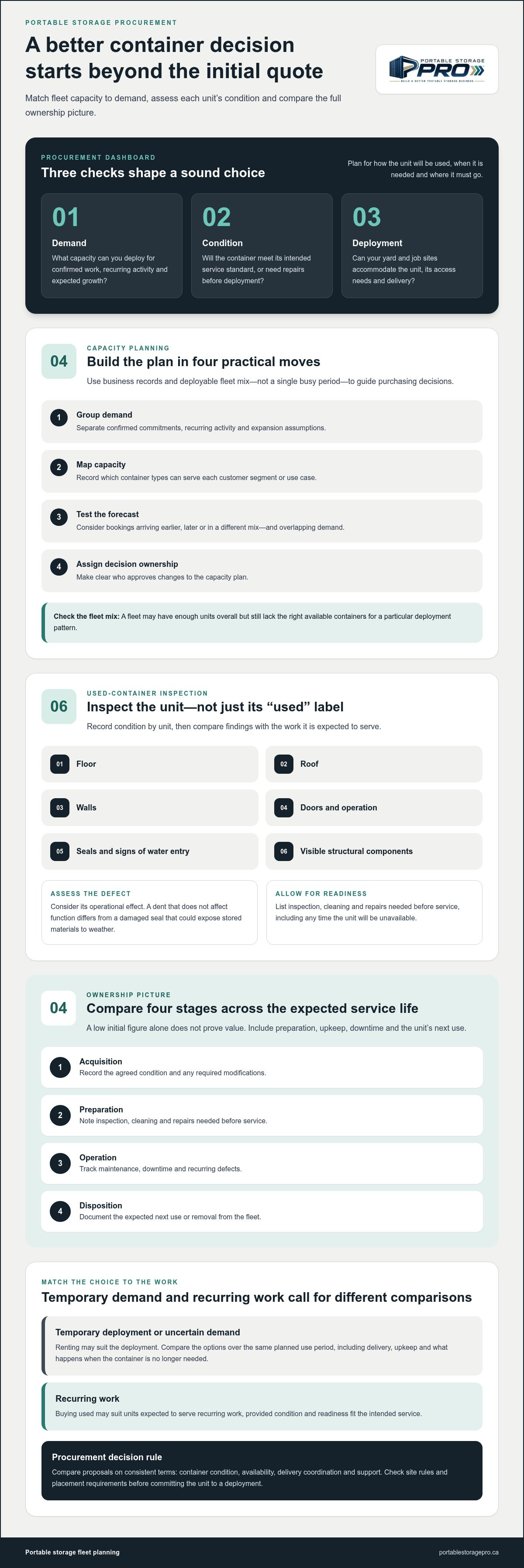
- Group demand: Separate confirmed commitments, recurring activity, and expansion assumptions.
- Map capacity: Record which container types can serve each customer segment or use case.
- Test the forecast: Consider what happens if expected bookings arrive earlier, later, or in a different mix.
- Set decision ownership: Assign responsibility for approving changes to the capacity plan.
A useful stress test asks whether the business can meet demand if several expected bookings overlap. It also considers what happens if a planned market or customer segment develops more slowly. Compare each scenario with the fleet’s deployable mix and operating capacity. This keeps purchase decisions responsive to uncertainty without treating a single forecast as certain.
In the United States, safety, building, zoning and transportation requirements depend on the jurisdiction and intended use. Identify the rules that apply to the proposed site, placement and movement before committing containers to that deployment.
Procurement risks include unauthorized access, weather exposure, handling damage and missed delivery commitments. Assign responsibility for site security, inspect units on receipt, and record delivery milestones and escalation steps in purchasing documents.
Revisit capacity goals when booking patterns, customer mix or fleet readiness changes. A documented review helps distinguish a temporary demand spike from a sustained shift, giving you a stronger basis for future purchasing decisions.
Cost benefits of buying used containers
Renting may suit temporary deployments or uncertain demand; buying used may suit units expected to serve recurring work. Compare both options over the same planned use period, including delivery, upkeep and what happens when the container is no longer needed.
Consider accessibility, sustainability and total cost of ownership together. Match door access and interior layout to the people, equipment and materials that will use the unit. Include transport, inspection, repairs, upkeep and eventual disposition when assessing the asset’s full service life.
Start the purchase decision with condition, not the label “used.” Inspect the floor, roof, walls, doors, seals and visible structural components. Check that doors open and close properly, and look for evidence of water entry. Record findings by unit so the team can compare condition with intended use before accepting delivery.
Assess defects by their operational consequences. A dent that does not affect function differs from a damaged seal that could expose stored materials to weather. List repairs needed before deployment, then consider whether the unit can meet the intended service standard. If work is required, include the time the container will remain unavailable in your evaluation.
Build a per-unit comparison using consistent categories:
- Acquisition: Record the agreed condition and any required modifications.
- Preparation: Note inspection, cleaning, and repairs needed before service.
- Operation: Track maintenance, downtime, and recurring defects.
- Disposition: Document the expected next use or removal from the fleet.
This record supports a useful total cost of ownership analysis: compare the initial outlay with preparation, maintenance, downtime and eventual disposition over the expected service life. Don’t treat a low purchase figure as proof of value. A container that repeatedly leaves service can disrupt availability, while a serviceable unit may support recurring deployments without requiring a new unit for each fleet addition.
Used containers can also support a staged fleet decision. An operator testing a new service may assign a small group of inspected units, then review customer demand, maintenance records and deployment suitability before expanding. Base the review on observed operating evidence rather than assuming one unit’s condition represents every used container.
For sustainability, record reuse, repairs, transport and service life rather than relying on a general claim about environmental benefit. Extending an asset’s use may reduce replacement frequency, while repeated transport or extensive repairs affect the overall assessment. Compare these factors for the specific container and operating plan.
Use inspection and maintenance records to refine future purchasing standards. If several units show the same failure pattern, adjust acceptance criteria or intended use. Each used-container purchase can then inform the next fleet decision.
Procurement for job-site storage and workspace
Begin with a site-use brief describing the work the container must support. Name the materials or equipment, identify who needs access, and explain how often crews will retrieve items. For example, a construction site storing consumables needs a different layout from a restoration team separating damaged materials. This brief ties the selected container to the job, not a general assumption about storage.
Estimate usable capacity from the actual load plan. The listed container options provide up to 2,696 cu ft. of storage capacity, while listed options can hold up to 62,974 lbs. of items. Those figures describe different planning limits. Check the load’s dimensions, weight, stacking method, and access sequence before applying either figure to a specific job.
Map the worksite before ordering. Mark the proposed placement area, delivery path, crew circulation and locations where equipment or materials move throughout the day. Note obstructions, ground conditions and areas that must remain clear for site operations. A placement that fits on a drawing can still disrupt workflow if it blocks a route used by crews or machinery.
Use an ordered procurement process: define the use case, prepare the load plan, document site requirements, issue a consistent specification and review the proposed arrangement before approval. Record container type, condition, delivery location, required timing and intended use in the order documents. Make the approved specification available to the receiving team.
Set out practical terms in the purchase agreement. State the agreed unit condition, delivery window, site contact, unloading responsibilities, inspection procedure, defect documentation, warranty terms and process for schedule changes. Specify how the receiving team will record exceptions. Clear terms reduce confusion if a unit arrives damaged or cannot be placed as planned.
- Access plan: Identify the delivery route, placement area, crew entry points, and materials-handling path.
- Load plan: Record item dimensions, weight, stacking arrangement, and retrieval order.
- Site roles: Name the person receiving the unit and the person approving its placement.
- Acceptance record: Document condition at arrival and note any deviation from the approved order.
Consider a job site storing tools used by different crews. Assign zones by work function, keep frequently retrieved items near the access point and document who controls entry. This can reduce unnecessary searching and disruption during active work. If the container also serves as workspace, define those activities separately from storage requirements.
Review job-site performance after placement. Record whether crews could access materials as planned, whether the layout caused workflow conflicts, and whether delivery instructions matched site conditions. Use these observations to improve the next specification. A consistent site-use brief, load plan and written agreement make procurement decisions easier to apply across projects.
Supplier reputation and transparent pricing
Compare suppliers using the same written specification and evaluation criteria. A request should identify container type, condition, intended use, delivery location and required timing. This gives each supplier the same operating context and makes proposals easier to compare. Record each response against your requirements instead of relying on sales conversations or memory.
Assess supplier reliability through delivery performance, container quality and compliance with agreed terms. Request evidence relevant to those areas, such as delivery records, inspection procedures and documented processes for resolving defects. Note how the supplier handles schedule changes and communicates delays. A clear record is more useful than a broad claim of dependable service.
References can help, but the project should resemble your intended use. A reference involving stationary yard inventory may not show how well a supplier supports repeated job-site deployments. Compare operating requirements, delivery conditions, container type and inspection expectations. Use examples that match your service model, not simply the most prominent project in a supplier’s portfolio.
Apply the same scorecard to every proposal. Rate each area against your written requirements and document the evidence behind each rating.
- Condition: Compare inspection findings, visible damage, door operation, and the supplier’s acceptance process.
- Delivery: Record the stated delivery window, communication process, and responsibility for unloading.
- Support: Note warranty terms, defect-resolution steps, and the process for reporting issues.
- Reliability: Compare relevant references, delivery records, and evidence of consistent quality.
Transparent quotes make differences in scope visible. Ask each supplier to separate container specifications from delivery arrangements, unloading responsibilities, inspection, modifications and support. Identify what each proposal includes and excludes. For example, two quotes may describe similar containers but assign site preparation or unloading differently. Those distinctions affect your operating plan even when the equipment appears comparable.
Put commercial terms in writing before approving an order. Define the agreed condition, delivery location, schedule, acceptance process, defect documentation, warranty coverage and how schedule changes are handled. Keep the final proposal with any revisions. This gives your receiving team a clear reference if a delivered unit differs from the agreed specification.
For a repeat order, compare the latest proposal with the previous specification and delivery record. Flag changes in condition, scope, timing or support before approval. A documented comparison helps distinguish a genuine improvement from a change that shifts work or uncertainty onto your operation.
This gives the project team a consistent record for later review. Compare container suppliers using the same requirements and scorecard to assess pricing and service quality. Weigh a lower quote against evidence of delivery, condition and support instead of treating price alone as proof of value. Record unanswered questions and clarify differences before selecting a supplier. This makes the decision easier to explain and helps ensure the comparison reflects the service actually proposed.
Supplier reference projects are useful only when their operating requirements resemble the proposed use case. Check whether the reference involved similar deployment conditions, delivery expectations and inspection needs. If they differ substantially, treat the reference as limited evidence and seek an example that better matches the planned operation.
How much do portable storage containers cost to buy, rent, deliver, and maintain in the United States?
There is no single useful figure for every U.S. operation. Build a project-specific comparison covering acquisition or rental, delivery, readiness work and ongoing maintenance. The result depends on container condition, intended use, location, delivery requirements and how long the unit will serve your fleet.
For buying, compare new and used units against the same specification. A listed 20-foot used container measures 20 feet long, 8 feet wide, and 8 feet 6 inches high. A listed 40-foot used container measures 40 feet long. Confirm how dimensions, condition, and modifications affect your planned use before comparing supplier proposals.
For rental, assess the commitment against the deployment period and expected utilization. A short project with uncertain demand may favour flexibility. Recurring demand can make ownership worth evaluating, provided your operation can manage inspection, upkeep and idle inventory. Compare the alternatives over the same service period.
Give delivery its own line in your procurement worksheet. Record the origin, destination, access conditions, delivery window, unloading responsibilities, and any return or repositioning requirements. A site with restricted access may need a different delivery plan from an open yard. Ask suppliers to describe the scope clearly, then compare like with like.
Plan maintenance around the container’s condition and intended use. Track inspections, door and seal issues, floor condition, repairs, cleaning and time out of service. A unit used repeatedly on job sites may need a different upkeep plan from one kept in a controlled yard. Use maintenance records to assess fleet readiness and identify recurring defects.
Use a comparison sheet with separate fields for each procurement component:
- Acquisition: Record the container specification, condition, and included modifications.
- Rental: Document the term, return conditions, and responsibilities during use.
- Delivery: List transport scope, site access needs, unloading, and schedule terms.
- Maintenance: Track inspections, repairs, cleaning, and operational downtime.
For example, compare a used 20-foot unit for yard inventory with a rented unit assigned to a time-limited job. Keep the location, deployment period, condition standard, and delivery scope consistent. This makes the trade-off visible without treating the initial quote as the full ownership picture.
For a U.S. order, request proposals against one written specification and document exclusions before approval. Keep delivery and maintenance assumptions beside each proposal. This record helps explain the decision and update the comparison when demand, route plans or fleet condition changes.
Discuss container procurement requirements when you need help structuring supplier comparisons for your operation.
Portable Storage Pro: Growth Engagement Model
Portable Storage Pro’s Consulting Partner model can help connect container procurement decisions to broader operating goals. Bring demand forecasts, fleet requirements and supplier proposals into a structured plan for purchasing and deployment.
Use Procurement & Sourcing when you need support defining specifications, comparing supplier options, or coordinating sourcing through direct supplier relationships without PSP supplier markups. Sales, Marketing & Lead Generation can address demand planning from the customer-acquisition side, while Technology & Innovation Consulting can help assess tools that support fleet and procurement decisions.
This support is relevant when expansion plans, supplier choices and operating capacity need to work together. Bring your procurement priorities and current business challenges to a discussion about practical next steps.
Contact Portable Storage Pro to discuss your procurement priorities.
Turn procurement decisions into operating discipline
A portable storage procurement strategy should remain active after an order is placed. Review each purchase against fleet readiness, customer demand and the operating plan. Assign someone to track delivery, acceptance, deployment and performance, then use those records to improve future purchasing decisions.
If procurement choices are difficult to connect with growth priorities, Portable Storage Pro’s Growth Engagement Model can align planning with practical business needs. Its Procurement & Sourcing and Sales, Marketing & Lead Generation offerings can help address purchasing decisions alongside the demand those assets must serve.
Choose a procurement action your team can own, document the reason and set a review point based on operating results. This gives you a clearer basis for adjusting fleet plans as the business develops.
Discuss your procurement priorities with Portable Storage Pro and identify a practical next step for your operation.
Frequently Asked Questions
What is a portable storage procurement strategy?
A portable storage procurement strategy is a decision framework for matching container purchases or rentals to business needs. It defines who approves procurement, what evidence supports a request and how performance is reviewed after deployment. For example, an expansion request can require a demand forecast and an operating owner before funds are committed. This connects purchasing decisions to business priorities rather than individual preferences.
How should organizations estimate portable storage capacity and demand?
Combine confirmed bookings with qualified quotes, contract renewals, repeat customer activity and seasonal patterns. Translate those signals into the expected service period for each unit, then subtract serviceable inventory and incoming containers. Track cancellations and actual utilization alongside the forecast. If demand repeatedly differs from projections, investigate whether quote conversion, unit turnaround or time out of service explains the gap before changing the next order.
What criteria should be used to compare portable storage vendors and products?
Compare each option against the same operating requirements, then assess condition, inspection evidence, supplier quality controls, delivery performance and support terms. For supply resilience, consider production capacity, inventory locations, quality consistency and disruption plans. Match references to your intended deployment conditions. A weighted scorecard can help rank requirements by operational consequence, while written acceptance criteria make supplier commitments easier to assess on receipt.

Article by
Paul Taylor
Paul Taylor is the founder of Portable Storage Pro, bringing more than 35 years of experience across the container, portable storage and transportation industries. His background spans executive operations, business development, global procurement, sales, marketing and operational improvement in Canada, the UK and international markets.
Paul helps independent portable storage and container rental operators increase revenue, strengthen margins and build more efficient businesses. His work connects strategy with practical implementation, including pricing, delivery operations, supplier sourcing, staff training, technology and customer experience.
His experience includes leading multi-location storage operations and serving on the National Portable Storage Association’s board along with chairing its Canadian committee. Through Portable Storage Pro, Paul shares practical insights to help owners make informed decisions, solve operational challenges and grow profitably.
Disclaimer
Content published by Portable Storage Pro Inc. (PSP) provides general business information and industry insights. It does not replace advice tailored to your business or specialist legal, tax, engineering or other regulated advice. Reading this content or contacting PSP does not, by itself, establish a consulting engagement.
Information reflects circumstances at publication and may change. Examples and potential benefits are illustrative; results depend on individual circumstances, implementation and market conditions and are not guaranteed.
Client services are governed by the signed service agreement, agreed work plan and written amendments. Website and blog content do not amend those terms. PSP’s work is subject to applicable law and the professional commitments set out in its agreement, including the CMC-Canada Code of Professional Conduct and NPSA Code of Conduct and Ethics. Copies are available on request.
Views expressed are PSP’s own. Association membership or references do not imply association endorsement or CMC certification. Nothing in this disclaimer limits PSP’s contractual responsibilities, professional duties or rights that cannot lawfully be excluded.


