
Selecting logistics software for portable storage hinges on SOP standard operating procedures compliance, vendor negotiation strategy, ISO-grade containers, and a solid SOP library. The client does not publish exact figures because implementation costs depend on fleet size, dispatch requirements, and existing accounting integrations. Your real decision is narrower: which platform tier matches how you dispatch today, what each container truly costs to run on that platform, and whether an off-the-shelf storage product will fight your mobile workflows. For personalized guidance on technology and innovation, you can consult with experts to streamline your technology stack.
Match Software to Fleet Scale Before You Overbuy
Matching software to your fleet size prevents overpaying for unused features or outgrowing basic systems. In advisory work with operators, smaller fleets often falter by adopting complex, enterprise-level platforms too early.
Typical situations we map first:
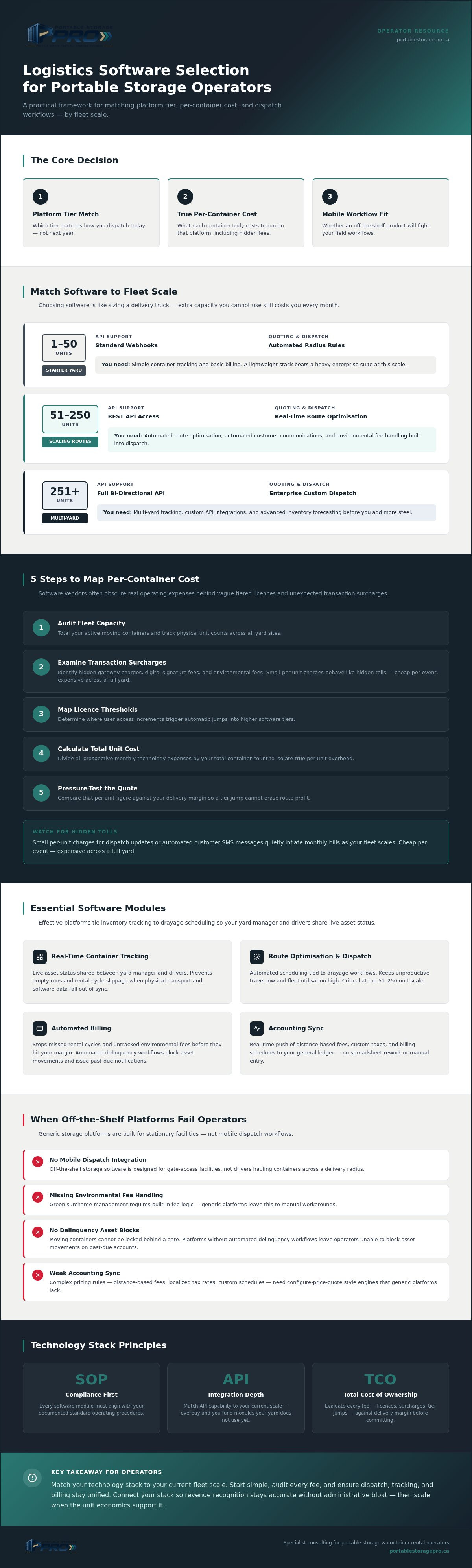
- You run a starter yard (1–50 units): you need simple container tracking and basic billing, so a lightweight stack beats a heavy enterprise suite.
- You are scaling routes (51–250 units): you need automated route optimization, automated customer communications, and environmental fee handling built into dispatch.
- You operate multi-yard volume (251+ units): you need multi-yard tracking, custom API integrations, and advanced inventory forecasting before you add more steel.
| Fleet Scale | API Support Level | Native Quoting & Dispatch |
|---|---|---|
| 1–50 Units | Standard Webhooks | Automated Radius Rules |
| 51–250 Units | REST API Access | Real-Time Route Optimization |
| 251+ Units | Full Bi-Directional API | Enterprise Custom Dispatch |
Choosing software is closer to sizing a delivery truck than buying a brand name: extra capacity you cannot use still costs you every month. If you want expert guidance on scaling your fleet efficiently, review how specialist operator support assists growing fleets. More on this: Portable Storage.
A commenter in the biggerpockets.com thread "From 0 to 84: How I grew my portable self storage business":
"I thought to myself "wow, with portable units I could start small and build the business one unit at a time."" (source)
Situation: you want to enter portable storage without a full facility build. Approach: start with a single unit and simple tracking. Result: you earn a scalable foundation before you step into higher operational software tiers, instead of funding modules your yard does not use yet.
Features That Tie Tracking, Dispatch, and Billing Together
Modern portable storage software maps real-time container tracking, dispatching, and automated billing into unified operational modules. Building new self-storage facilities has become harder and more expensive because many municipalities have restricted new construction. Consequently, you rely on moving containers to expand capacity without new real estate.
Effective platforms tie inventory tracking to drayage scheduling (short-distance container hauling) so your yard manager and drivers share live asset status. When physical transport and software data flows stay out of sync, empty runs rise and rental cycles slip. Automated billing modules stop missed rental cycles and untracked environmental fees before they hit your margin.
Match each software module to your dispatch workflow so unproductive travel stays low and fleet utilization stays high. If you want help aligning those modules with longer-term goals, start the conversation and walk through your current stack with Portable Storage Pro.
5 Steps to Map Per-Container Cost and Pricing Tiers
Software vendors often obscure real operating expenses behind vague tiered licenses and unexpected transaction surcharges. Calculating technology costs means auditing every fee tied to fleet size, not only the headline license.
Small per-unit charges for dispatch updates or automated customer SMS messages quietly inflate monthly bills as your fleet scales. Those micro-fees behave like hidden tolls: cheap per event, expensive across a full yard.
- Audit fleet capacity: total your active moving containers and track physical unit counts across all yard sites.
- Examine transaction surcharges: identify hidden gateway charges, digital signature fees, and environmental fees.
- Map license thresholds: determine where user access increments trigger automatic jumps into higher software tiers.
- Calculate total unit cost: divide all prospective monthly technology expenses by your total container count to isolate true per-unit overhead.
- Pressure-test the quote: compare that per-unit figure against your delivery margin so a tier jump cannot erase route profit.
Reviewing contract fine print protects your bottom line as volume grows. For tailored guidance on software selection and fleet expansion, explore consulting services for operators.
Accounting Sync That Removes Manual Fee Entry
Real-time accounting sync eliminates manual data entry by automatically pushing distance-based fees, custom taxes, and billing schedules straight to your general ledger. In field operations, managing distance fees by hand consumes hours. Tracking environmental fees alongside localized tax rates needs instant automated updates.
Complex pricing rules often need configure-price-quote style engines so accurate figures reach your billing platform without spreadsheet rework.
Handling customers who do not pay is harder in portable storage because moving containers cannot simply be locked behind a gate and auctioned. Capable platforms trigger automated delinquency workflows, blocking asset movements while issuing immediate past-due notifications.
Connect your technology stack so revenue recognition stays accurate without administrative bloat. If you need help structuring operational tech, consider a consulting engagement to refine how Portable Storage Pro supports your systems while you keep day-to-day authority.
How Logistics Tracking Cuts Delivery and Yard Costs
Automated dispatch reduces total distance by assigning container deliveries from driver location and live route traffic.
In field consultations, operators frequently report paying for wasted fuel when tilt-bed trucks haul single units across town inefficiently. Situation: scattered drop-offs with no grouping. Solution: automated GPS mapping and geofencing. Result: empty runs fall because nearby drop-offs share one route instead of separate trips.
Standard flatbed trailers or consumer haulers often fail because the storage units sit too high above the ground to park vehicles or trailers underneath. Specialized moving containers need precise delivery tracking to free yard space and cut staging delays.
Integrating geofencing triggers real-time yard updates the moment a truck enters the perimeter. Stack integration also lets you watch environmental fees beside fuel spend, so routing decisions reflect full trip cost. Automated dispatch often pays for itself within three months through fuel savings alone, including on smaller fleets that assumed route software was only for large yards.
Vendor Fit by Fleet Scale and API Depth
Evaluating technology options means balancing your current fleet size against technical Capability. Architecture built for moving containers lets dispatch scale without forcing workarounds into every job.
Use the fleet-scale table above as the filter: starter yards usually need standard webhooks and automated radius rules; mid-sized fleets benefit from REST API access and real-time route optimization; the largest operations need full bi-directional API support and enterprise custom dispatch.
API access limits often slow quote speed more than raw fleet count does. An open system can synchronize inventory databases and customer portals without manual re-keying. Custom quoting should apply environmental fees automatically so longer delivery routes keep margin. Align stack choices with the dispatch complexity you run this quarter, not the org chart you hope to have in five years.
When Off-the-Shelf Storage Platforms Fail Operators
Off-the-shelf software platforms fail when rigid workflows force you to adapt container operations to generic self-storage logic. In advisory work, smaller fleets often carry unnecessary system overhead: complex products built for static facilities waste administrative time when you only run about twenty units in a single yard.
Standard container software often lacks the spatial flexibility mobile assets need. A simple spreadsheet can still serve localized, low-volume yards better than a suite you babysit. An oversized technology stack adds friction without lifting monthly delivery margins, and enterprise platforms adopted too early bury small teams in data entry.
Before you buy specialized tools, test whether manual tracking is the true growth limit or whether the pain is elsewhere in SOPs and routing.
A commenter in the biggerpockets.com thread "From 0 to 84: How I grew my portable self storage business":
"As for Building, that has become harder and more expensive, too. Many municipalities around the nation have cracked down on Building new self storage facilities." (source)
Municipal limits on new facilities push you to raise efficiency on the fleet you already own through tighter delivery routing and higher yard density, not through software theatre.
Credentials and Advisor Support That Steady Your Rollout
Software alone cannot fix broken operational workflows or standard operating procedures (SOPs, step-by-step driver instructions). Deploying digital platforms on inefficient delivery processes only accelerates mistakes. Advisors aligned with recognized trade groups add external rigor before you sign a multi-year license. Portable Storage Pro is a proud member of the National Portable Storage Association and CMC-Canada (the Canadian Association of Management Consultants), and helps operators streamline daily container tasks before they refresh the software under those tasks.
Tip: Align your operational workflows with standard industry consultant framework guidelines before you lock into long-term software contracts.
Frequently asked questions
What features are essential for portable‑storage management software?
Essential software features include dispatch tools, unit availability tracking, automated invoicing, customer portals, and GPS location monitoring. Those capabilities turn moving containers into a predictable, trackable process across your fleet so your operations team can see unit status and schedule with fewer call-backs.
How does the software integrate with accounting tools?
Logistics software connects directly with accounting platforms to sync invoices, track payments, and update ledger entries automatically. Environmental fees then flow into financial reporting without double entry, which cuts administrative hours and tightens bookkeeping accuracy.
How does logistics tracking improve operations?
Real-time tracking shows container locations, delivery schedules, and yard inventory levels. Knowing unit positions reduces empty runs, limits lost assets, and shortens customer drop-off cycles so dispatchers plan from live data rather than radio checks.
What is the best software for storage management?
The right software depends on your operational size, fleet complexity, and technology stack requirements. Evaluate platforms on ease of integration, scheduling strength, and support for container workflows, then request a direct consultation to see which system fits your growth goals.
What software is used for logistics?
Logistics management relies on specialized dispatch applications, customer relationship management tools, and fleet tracking systems. Portable Storage Pro helps container operators identify, select, and deploy technology built for rental workflows. To discuss platform choices, reach the team at portablestoragepro.ca.
Optimizing Your Technology Stack
Choosing logistics software for portable storage reshapes daily container routing and yard efficiency when dispatch automation replaces manual entry. Fleet expansion in 2026 needs a technology stack that supports active tracking and automated billing without burying a small team in unused modules.
The same decision line you started with still holds: match tier to fleet scale, know your per-container software cost, integrate accounting before fees drift, and skip off-the-shelf products that ignore mobile workflows. Professional memberships in industry organizations back the advisory approach; advisers help you review current tools and streamline rental workflows while you retain day-to-day management authority.
Ready to refine your operational systems? Discuss your business needs and map the next upgrade step from your live dispatch constraints. More on this: Contact Portable Storage.

Article by
Paul Taylor
Paul Taylor is the founder of Portable Storage Pro, bringing more than 35 years of experience across the container, portable storage and transportation industries. His background spans executive operations, business development, global procurement, sales, marketing and operational improvement in Canada, the UK and international markets.
Paul helps independent portable storage and container rental operators increase revenue, strengthen margins and build more efficient businesses. His work connects strategy with practical implementation, including pricing, delivery operations, supplier sourcing, staff training, technology and customer experience.
His experience includes leading multi-location storage operations and serving on the National Portable Storage Association’s board along with chairing its Canadian committee. Through Portable Storage Pro, Paul shares practical insights to help owners make informed decisions, solve operational challenges and grow profitably.
Disclaimer
Content published by Portable Storage Pro Inc. (PSP) provides general business information and industry insights. It does not replace advice tailored to your business or specialist legal, tax, engineering or other regulated advice. Reading this content or contacting PSP does not, by itself, establish a consulting engagement.
Information reflects circumstances at publication and may change. Examples and potential benefits are illustrative; results depend on individual circumstances, implementation and market conditions and are not guaranteed.
Client services are governed by the signed service agreement, agreed work plan and written amendments. Website and blog content do not amend those terms. PSP’s work is subject to applicable law and the professional commitments set out in its agreement, including the CMC-Canada Code of Professional Conduct and NPSA Code of Conduct and Ethics. Copies are available on request.
Views expressed are PSP’s own. Association membership or references do not imply association endorsement or CMC certification. Nothing in this disclaimer limits PSP’s contractual responsibilities, professional duties or rights that cannot lawfully be excluded.


